

Author
Faculty Overload, Student Exploitation, and Systemic Corruption
India’s higher education landscape is immense, featuring more than 1,200 universities and over 58,000 colleges, with nearly 45 million students enrolled. By sheer numbers, it stands as the third-largest education system globally. However, beneath this impressive scale, a deep crisis is unfolding: faculty are systematically overburdened, students face exploitation, and the integrity of institutions is being eroded.
Faculty Under Siege
A recent report from the Parliamentary Standing Committee (March 2025) highlighted a concerning issue: 56.18% of professor-level roles remain vacant in prestigious institutions such as IITs, IIMs, NITs, IISERs, and central universities. In total, nearly 19,000 sanctioned teaching positions—about 28.56%—are unfilled. Yet, education continues amid these gaps.
At some of India’s leading universities, the student-to-faculty ratio has climbed to at least 20:1, which is double the global standard of 10:1. Additionally, India’s education spending for 2024– 25 stands at a mere 4.6% of GDP, significantly below the NEP 2020 goal of 6%. Faculty members find themselves juggling multiple roles; they are expected to serve as educators, researchers, administrators, compliance officers, and counselors all at once. This overwhelming workload leads to widespread burnout, ultimately resulting in diminished research productivity, poorer outcomes for students, and increased staff turnover.
The Competitive Exam Mirage
Parallel to faculty overload runs another dangerous trend: the obsession with JEE, NEET, and other competitive examinations. Private tuition agencies and coaching institutions exploit the anxieties of students and parents, profiting from their desperation. Yet, the National Survey of India reveals that only 2–4% of aspirants secure admission to elite universities. The remaining
96–98% are channeled into private universities that mislead families with promises of “100% results” and “100% placements.” Even IITs and IIMs struggle to achieve 50% employment fortheir graduates.
Dubious practices sustain this false narrative of guaranteed success: industries are paid lakhs by institutions to temporarily employ outgoing students, creating the illusion of full placement. The funds for these arrangements are extracted from students via exorbitant fees, with a portion diverted to industry HR departments
Placement Scams and the Employability Crisis
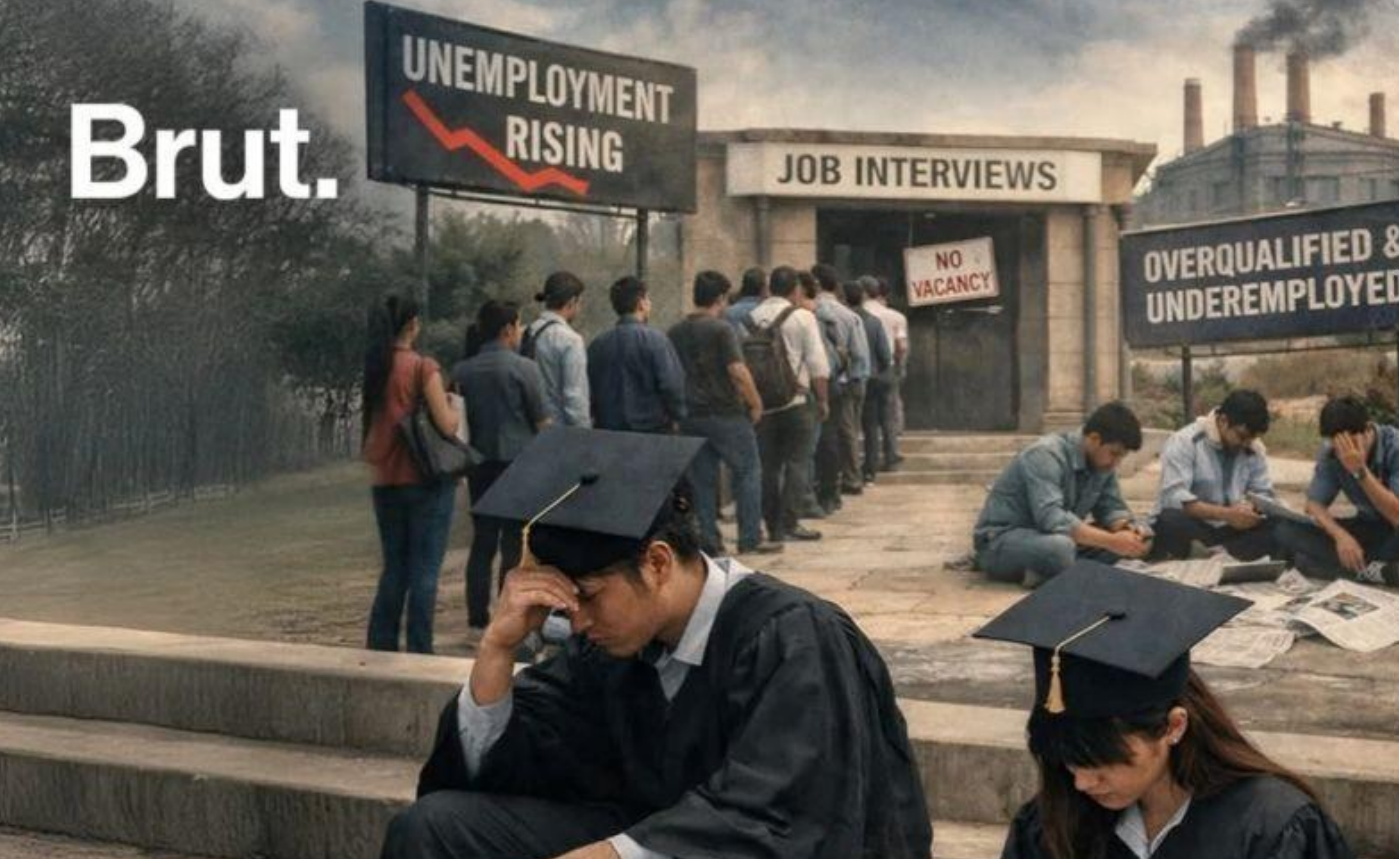
Some private universities now claim their students secure packages of ₹55 lakhs or more. But who verifies these figures? Is the government not accountable for permitting such misleading propaganda? These hiring scams are even more dangerous than university scams. Graduates are trapped in cycles of internships, short-term contracts, and sudden dismissals — their aspirations sold and shattered.
India’s employability crisis is stark:
Only 1 in 4 MBAs are employable.
Only 1 in 5 engineers is employable.
Only 1 in 10 general graduates are employable.
The India Skills Report confirms that 50% of graduates lack basic skills altogether
Globally, the ARWU 2025 rankings place Harvard at No. 1, with China rising rapidly. Indian universities remain absent from the top 500. Why? Because even IITs, IIMs, and NITs face nearly 50% faculty vacancies. The rest of India’s institutions — nearly 80% — survive by hiring underqualified staff or even listing fictitious faculty names on their rolls.
Intellectual Property Scams
Another dangerous trend is the misuse of intellectual property. Patents and publications have been reduced to marketing tools for private universities. Between 2020 and 2025, IITs filed 6,558 patents, of which only 43% were granted. In contrast, many private institutions file patents in bulk and secure approvals through underhanded payments. Fake papers and questionable patents flood the system, eroding academic credibility. Who are they deceiving? Not only the next generation, but the nation itself.
Roots of Corruption
This culture traces back to the 1990s LPG era, when the AICTE opened the floodgates for self-financing engineering colleges. What was once a national mission quickly morphed into a booming business. Politicians, real estate barons, and business magnates rushed in, treating educational institutions as return-on-investment ventures rather than centers of learning.
The numbers tell the story. The AISHE 2010 report recorded 621 universities and 32,974 colleges. By 2021, that figure had ballooned to 1,168 universities and 45,473 colleges. With 45 million students enrolled, India requires an estimated 2.5 million professors. Yet the country has only about half a million qualified PhD holders. The question is stark: who fills the gap, and what quality of guidance do students actually receive?
Behind the glossy brochures and political rhetoric lies a system stretched thin, where quantity has trumped quality. The expansion of higher education has been rapid, but the infrastructure to support it — faculty, research, and academic integrity — remains alarmingly inadequate.
What Must Change
The Parliamentary panel’s recommendations — workforce analysis, transparent recruitment, and phasing out contractual hiring — are necessary but nowhere near sufficient. India’s higher education system is bleeding credibility, and only deeper structural reforms can stop the rot.
1. Accreditation Rationalization: Today’s faculty are drowning in overlapping NAAC, NBA, and UGC paperwork. A unified digital portal could reclaim hundreds of productive hours each year. Until then, accreditation remains a bureaucratic racket.
2. Funding Alignment: India’s allocation of ₹1.20 lakh crore to education in 2024–25 is trumpeted as progress. In reality, it still falls short of the NEP 2020 target. Closing this gap is not charity — it is the bare minimum investment in national infrastructure.
3. Placement Transparency: Bogus salary packages and manipulated employment records are sold as success stories. Independent audits must be mandatory, and fraudulent placement claims should be criminalized. Anything less is complicity in deception
4.Patent Integrity: Fake patents and papers are flooding the system, bought through underhanded payments. A judicial external audit commission is overdue to investigate this intellectual property racket. Innovation is being hijacked by corruption
India’s education crisis is not just about inefficiency — it is about deliberate fraud, systemic exploitation, and the betrayal of millions of students. The façade of progress hides a machinery of manipulation, where institutions mint money while futures are destroyed.
Advice to Students
To students, the warning is clear: don’t be seduced by glossy ads or flashy social media campaigns. Speak to alumni, verify their jobs and pay, and judge faculty by research, patents, and industry exposure — not by cafeterias or classrooms. Demand laboratories, incubation centers, skill labs, libraries, and enlightened mentors. Reject five-star cafeterias; insist on five-star education.
A Call to the Prime Minister
I urge the Honorable Prime Minister to intervene. The rot in India’s education sector is no longer a matter of inefficiency; it is systemic corruption. A judicial external audit commission must be formed to investigate and cleanse this machinery of deceit.
If left unchecked, the consequences will be catastrophic. Our next generation risks being driven into illegal businesses, mafia, and unlawful acts to survive. India does not need zombies, drug cartels, or prostitution mafias. What this nation demands is an energized, skilled, and ethical youth community — a generation capable of leading India into 2047 with integrity and
innovation.
The choice is stark: either we confront the corruption now, or we condemn millions of young Indians to futures built on fraud and despair