
Author
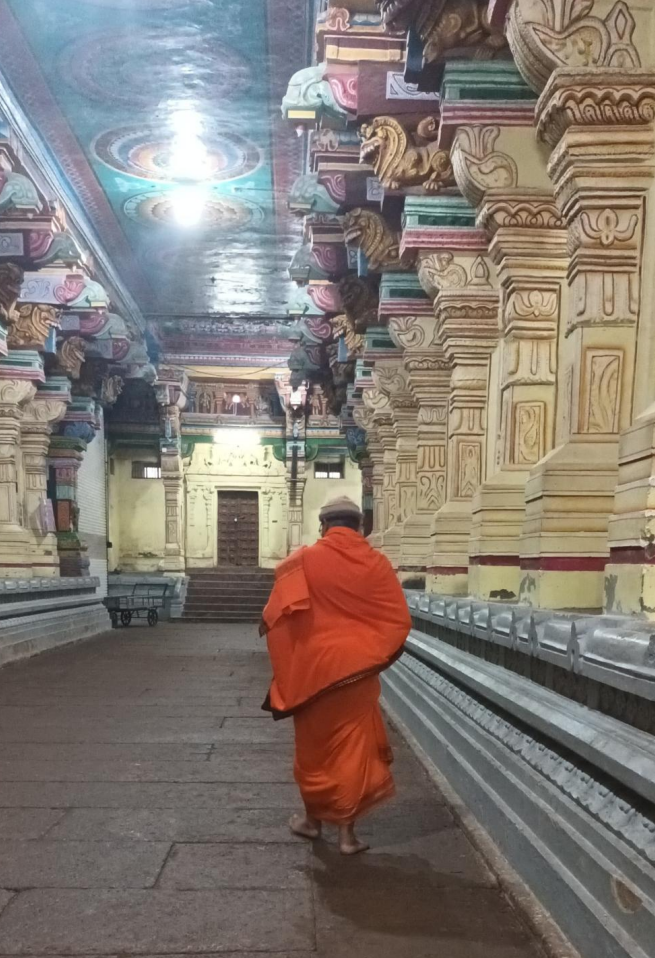
Faith is meant to be a bridge between the human soul and the divine. Yet, in my journeys across various Hindu temples in India, I have witnessed how this sacred bridge is often broken—not by the gods, but by the hands of men who claim to serve them.
The temples, which should be sanctuaries of peace and devotion, have become marketplaces where money speaks louder than prayer. Blessings are no longer bestowed through spiritual grace but are mediated by agents of God—middlemen who stand between the devotee and the deity, demanding offerings before allowing access. The sanctity of darshan is diluted by the clinking of coins and the rustle of currency notes.
What disturbed me most was not merely the transactional nature of worship, but the uncivilized acts of so-called pandits. Many of them, illiterate in the true sense of Hindu philosophy, have not even opened a book on the culture they claim to represent. Their rituals are mechanical, their chants hollow, and their conduct often disrespectful. Instead of guiding devotees toward enlightenment, they exploit belief for personal gain.
The irony is striking: educated judges, police officers, administrators, and political leaders—pillars of society—bow before these exploiters, surrendering their dignity in the name of tradition. The bhaktas, regardless of their worldly stature, become victims of manipulation. In this inversion of dharma, the gods are shown not by sages but by rakshasas in human form.
This exploitation is not merely a betrayal of individual faith; it is a distortion of the very essence of Hindu spirituality. The temple, once envisioned as a Saraswathy Mandir—a place of knowledge, discipline, and truth—has in many places become a theatre of hypocrisy. When belief is exploited, God is not diminished, but humanity is. The divine remains pure, but the human custodians of divinity fail their sacred duty.
The challenge before us is not to abandon temples, but to reclaim them. To demand that those who stand as intermediaries embody the values of wisdom, humility, and service. To remind ourselves that true darshan lies not in the transaction of money, but in the sincerity of the heart. Only then can temples return to being sanctuaries of light, rather than arenas of exploitation.
At 3:30 in the morning, I stood on the seashore of Rameswaram, watching the waves carry centuries of faith. Millions arrive here each year for Bali Tharpanam, the ritual of offering to ancestors. What I witnessed was not the sanctity of tradition, but the machinery of exploitation.
Rows of wooden stools lined the shore—fifty men at dawn, swelling to a hundred by mid-morning. Each called out to grieving devotees, promising ancestral peace for a price. The cost varied from ₹600 to ₹3000 per person. Five to ten people were processed together, their tears genuine, their longing sincere. Yet the rituals were mechanical, completed in five minutes, stripped of reverence.
I calculated silently: ten people, ₹20,000 in five minutes. Two thousand people in a day. Forty lakhs daily per person. More than ₹146 crore annually per person. Add the holy dip—₹300 per person, 500 to 1000 people daily—another ₹5 to 11 crore a year per agent. Together, this small town witnesses a money flow of nearly ₹15000–16000 crore annually, untaxed, unregulated, unseen by government eyes.
The irony is piercing. These men have not studied the Vedas, nor pursued schooling, nor endured the struggles of examinations, interviews, or professional stress. Yet they earn 100X more than engineers, doctors, administrators, and judges—those very pillars of society who bow before them in the name of tradition. The literate world, the skilled society, stands mocked by this unskilled exploitation of belief.
The tears of devotees are real. Their grief is sacred. But the rituals have become hollow, reduced to transactions. The pundits finish one person’s kriya in minutes, moving on to the next, while the cries of remembrance echo in the background. Faith is commodified, grief monetized, belief exploited.
What message do we give the next generation? That faith is a business? That grief is a commodity? That the sacred can be sold by the minute? If this continues, temples will no longer be sanctuaries of light but theatres of hypocrisy.
The government remains blind to this vast laundering of belief, while political leaders fight over religion and ideology. None fight against the exploitation of faith itself. This is not merely a fraud industry—it is a philosophical crisis. When belief is exploited, God is not diminished, but humanity is. The divine remains pure, but the custodians of divinity fail their sacred duty.
The challenge before us is to reclaim the sanctity of rituals. To demand integrity, learning, and accountability from those who stand as intermediaries. To remind ourselves that true darshan lies not in the transaction of money, but in the sincerity of the heart. Only then can we restore temples to their rightful place—as sanctuaries of devotion, not marketplaces of exploitation.
Dr.Sreedhar Saraswathy