
Author
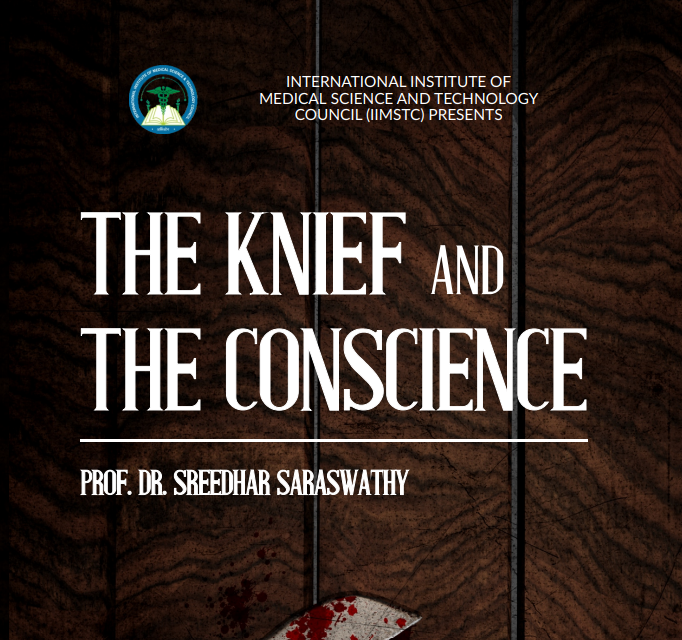
Book overview
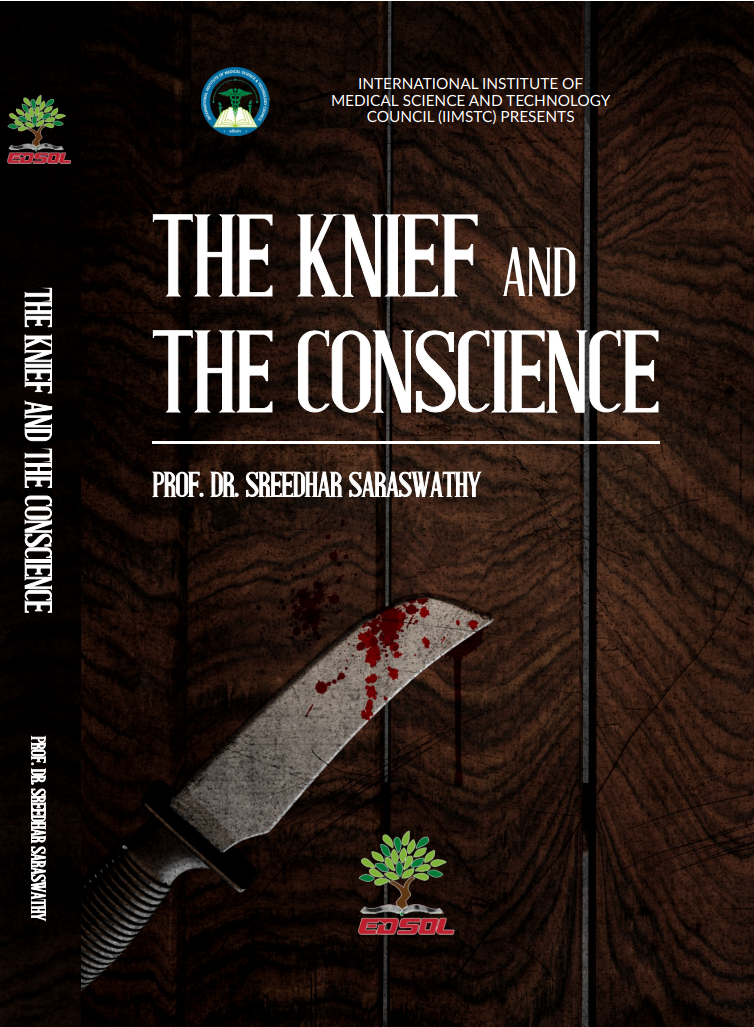
‘The Knife and the Conscience’ essentially to knowing the unknown, a crime file, is a literary crime narrative that examines justice not as a legal outcome, but as a moral practice—one that can fail quietly, efficiently, and without overt wrongdoing. Set against the framework of a murder investigation and its long aftermath, the book interrogates the ethical cost of institutional indifference and the human consequences of justice that listens too late.
At its surface, the work follows the case of Ravi, a man convicted of killing a police inspector. His crime appears unequivocal, his guilt legally established, and his punishment procedurally sound. Yet the narrative resists the simplicity of verdicts. Through a gradual unveiling of past events, the reader is led backward—from act to cause, from violence to neglect—revealing that the murder is not the origin of the tragedy but its final expression.
Central focus to the work is a triangular moral anatomy:
• Ravi, whose brief experience of love and responsibility exposes him to irreversible loss;
• A judge, legally correct yet ethically absent, whose decisions exemplify how justice can fail without malice;
• Dr. Sreedhar Saraswathy, a non-institutional moral presence who represents attention, listening, and conscience beyond authority.
The narrative explores how systems designed to uphold order can, through speed, detachment, and procedural correctness, erase vulnerability. A child’s death— administratively insignificant yet morally catastrophic—becomes the silent axis around which the entire story turns. Her absence exposes the limits of legality and forces a reckoning with the notion that indifference itself constitutes a form of violence.
Rather than offering redemption through punishment or closure through reform, the work advances a more unsettling proposition: that justice is not self-sustaining. It requires continual moral engagement, and when this engagement is replaced by neutrality, the law may continue to function while justice quietly collapses. Stylistically, the book aligns with contemporary literary fiction of philosophical depth, privileging restraint, psychological interiority, and ethical inquiry over sensationalism. The prose maintains a measured, reflective tone, allowing moral questions to emerge organically through character and consequence rather than argument. Violence is present but never gratuitous; emotion is restrained but cumulative.
The saga of ‘The Knife and the Conscience’ positions itself within the tradition of serious literary examinations of power, responsibility, and moral failure. It is not an indictment of law as an institution, but a study of what occurs when legality divorces itself from listening. The work invites readers—particularly those invested in justice, governance, and ethical authority—to confront an uncomfortable truth: that the most damaging failures of justice are often committed not through cruelty, but through correctness.
Ultimately, the work argues that to “know” is not merely to understand facts, but to accept responsibility for what those facts demand. In doing so, it offers a resonant, unsettling meditation on justice, conscience, and the cost of looking away.
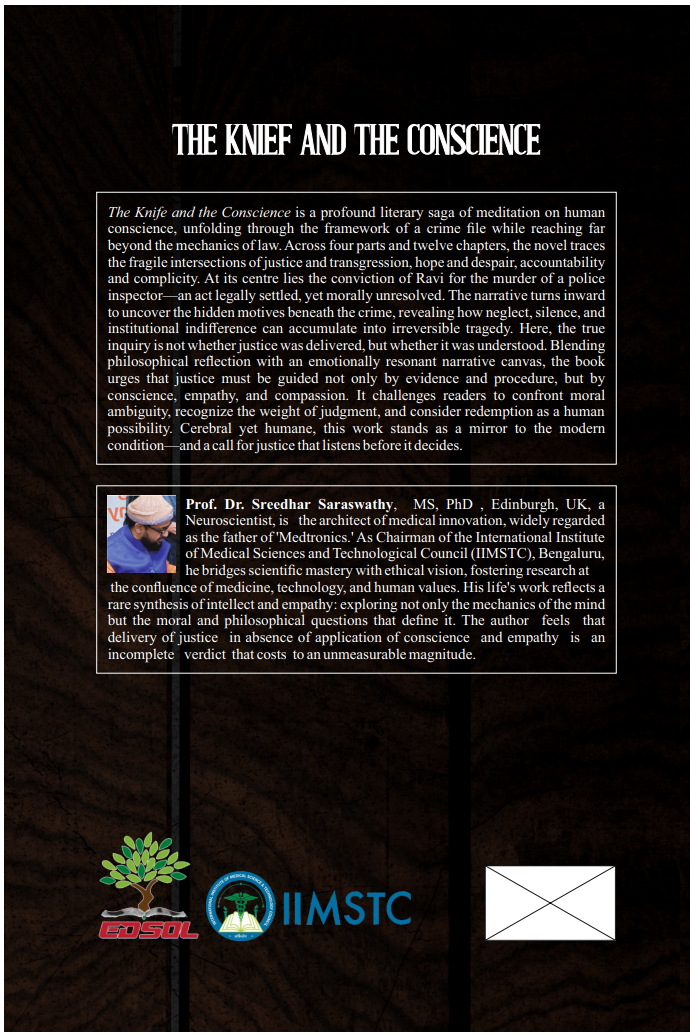
Prof. Dr. Sreedhar Saraswthy